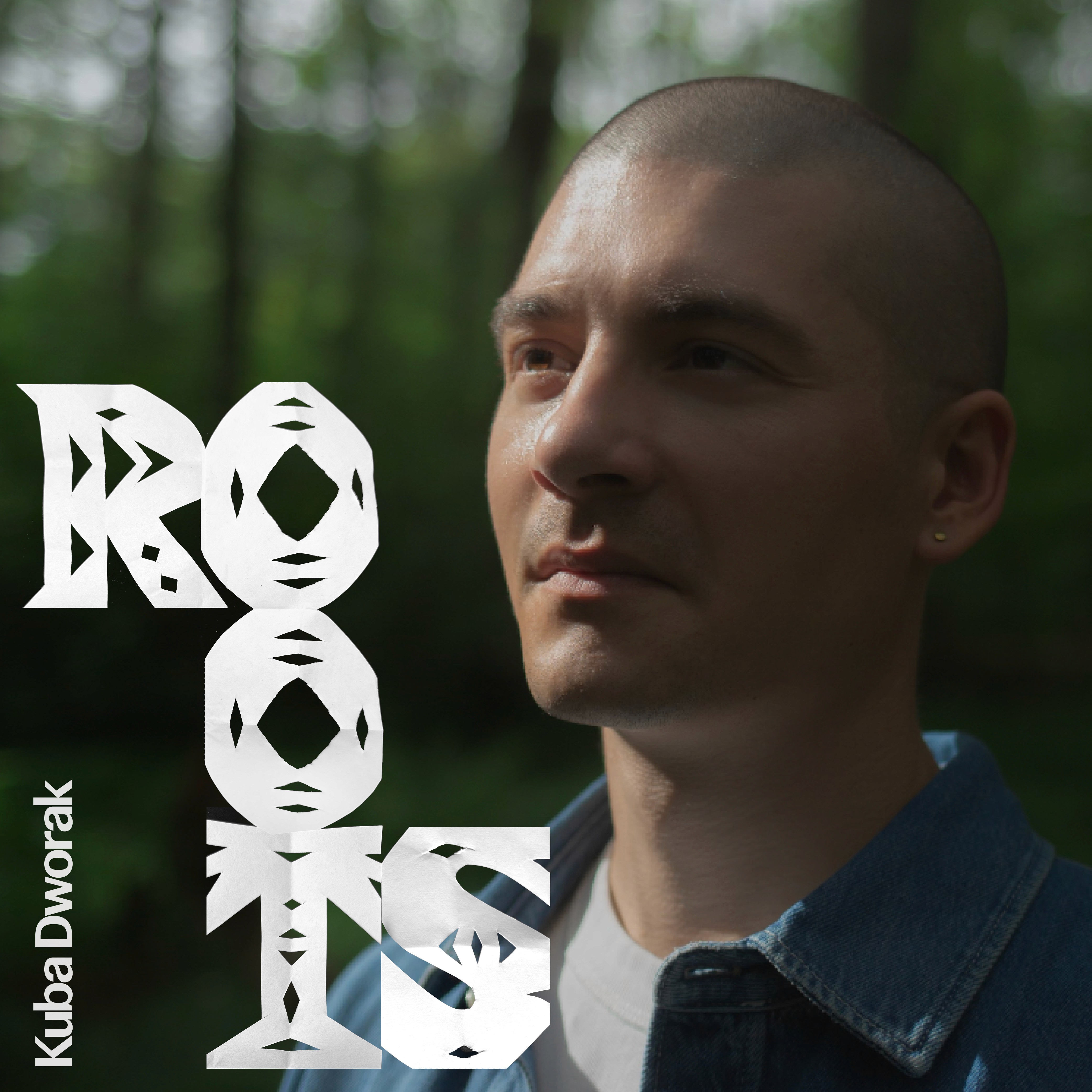
Roots is a solo double bass album by Kuba Dworak that explores ancestry, memory, and the quiet architecture of identity.
Recorded between New York City and southern Poland, the album draws from the sonic landscape of rural Central and Eastern Europe. Fragments of folk and sacred melodies appear throughout the record — not as direct quotations to be preserved, but as living forms, reshaped through improvisation, repetition, and personal interpretation.
At its core, Roots is an attempt to reconnect with inherited memory. Dworak’s family history traces back to the village of Radgoszcz in southeastern Poland — a region shaped by migration, faith, and cultural layering. The album approaches this history not as something fixed, but as something that continues to evolve through sound.
The double bass becomes both instrument and medium. Low frequencies ground the music in a physical, almost architectural presence, while harmonics and resonances create a sense of space that feels suspended between past and present. Pizzicato passages echo dance rhythms that are at once familiar and transformed, carrying traces of tradition without settling into it.
Improvisation plays a central role throughout the record. Many pieces begin with simple structures — modal centers, drones, or melodic remnants — allowing the music to unfold organically. In this process, recognizable elements emerge and dissolve, as if memory itself were being reassembled in real time.
Rather than reconstructing tradition, Roots engages with it directly. Sacred and folk materials are not treated as distant references, but as active forces — questioned, reinterpreted, and brought into a contemporary context.
The album moves between intimacy and expansion, stillness and momentum. It does not aim to define identity, but to explore how it is shaped — through place, history, and sound.
Roots is both a return and a transformation.